
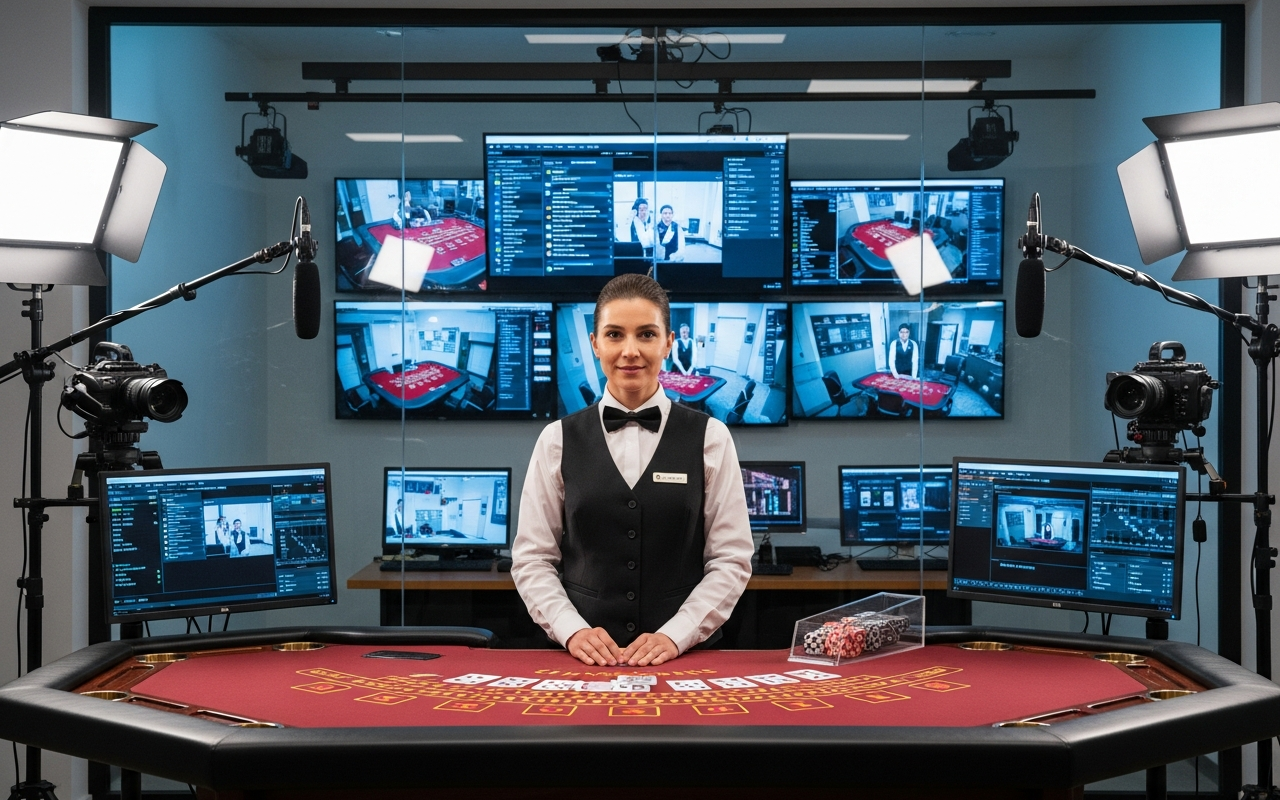
In the high-stakes world of US online gambling, a mere 1-5 second delay can transform a sharp in-play bet into a stale wager, particularly in the fast-moving microbetting markets that define modern sportsbook innovation. This streaming latency—the gap between real-world action and what bettors see on their screens—has become the invisible force reshaping how Americans engage with live casino games and sports betting.
Latency matters because US bettors increasingly demand real-time wagering experiences that mirror the split-second decision-making of live events. As state-by-state regulation expands and OTT streaming services proliferate, operators face unique challenges balancing broadcast delays with the microbetting growth that drives revenue. The stakes are particularly high in a market where synchronized streams can mean the difference between regulatory compliance and costly integrity violations, while latency ranges from sub-second solutions to problematic 30+ second delays fundamentally alter betting fairness and operator risk profiles.
What Latency Means in Live Casino and In-Play Betting
Latency represents the critical gap between real-world action—whether a roulette ball landing or a quarterback throwing a touchdown—and when that action appears on a bettor’s screen. This delay directly impacts micro-markets and real-time usability, as modern US bettors expect immediate visual feedback that aligns with rapidly changing odds and betting windows.
Understanding latency requires distinguishing between stream latency (video transmission delay) and data feed latency (odds and game state updates). While both affect the betting experience, their misalignment creates the most problematic scenarios for US operators.
The low-latency imperative has intensified as microbetting products like “next point scored” or “next card color” demand synchronization measured in milliseconds rather than seconds. When these elements fall out of sync, the entire in-play betting ecosystem suffers from reduced engagement and potential regulatory scrutiny.
For US operators, managing latency isn’t just about technology—it’s about maintaining competitive advantage in markets where bettors have multiple legal options and expect seamless real-time experiences that match the pace of live events.
Latency, Delay, and Synchronization: Key Concepts
Transport delay occurs naturally as data moves through networks, while intentional delays are added by operators for risk management or regulatory compliance. Synchronization challenges arise when video streams and data feeds experience different delay patterns, creating mismatched user experiences.
Consider the difference between a live dealer roulette spin in New Jersey, where a 2-second video delay might still allow meaningful betting, versus an NFL drive in a microbetting context, where the same delay renders “next play result” markets essentially unusable. US operators must calibrate their latency management strategies to match the tempo and betting patterns of specific game types.
These latency types compound differently across the complex US regulatory landscape, where state-specific requirements for player verification, geo-location checks, and responsible gambling tools can add additional milliseconds that accumulate into meaningful delays affecting betting window availability.
Typical Latency Ranges in US Live Casino and Sports Streams
Legacy broadcast systems typically operate with 15-45 second delays, making them incompatible with real-time betting applications. Specialized betting streams have reduced this to 2-8 seconds, while emerging ultra-low latency solutions achieve sub-second performance using WebRTC and optimized content delivery networks.
However, OTT streaming services popular with US sports fans often introduce 30+ second delays that create fundamental incompatibilities with microbetting products. This forces operators to choose between offering integrated streaming experiences or maintaining competitive real-time betting capabilities.
The technical reality means US operators often segment their offerings: traditional pre-game and slower in-play markets can accommodate higher-latency streams, while microbetting and live casino products require dedicated low-latency infrastructure that may not integrate seamlessly with popular consumer streaming platforms.
How Latency Reshapes In-Play Betting Dynamics in the US
Latency fundamentally alters betting windows for micro-markets, forcing operators to adapt their product offerings based on achievable delay ranges rather than pure market demand. Products must be designed around latency constraints, with higher-delay environments supporting broader betting windows and lower-frequency market updates.
The relationship between latency and betting dynamics becomes particularly complex when operators attempt to serve diverse customer segments with varying latency tolerance. Casual bettors may accept longer delays for integrated entertainment experiences, while sharp bettors demand minimal latency for competitive advantage.
| Latency level | Typical US use case | Betting window impact | Risk to operator | Experience for bettor |
|---|---|---|---|---|
| Sub-second (0.1-0.9s) | Live dealer casino, esports microbetting | Enables rapid-fire betting, real-time interaction | High infrastructure cost, arbitrage exposure | Seamless, responsive, high engagement |
| Low (1-3s) | Sports microbetting, live casino side bets | Workable for most micro-markets | Manageable with proper safeguards | Good responsiveness, minor delays |
| Medium (4-8s) | Traditional in-play betting, slower-paced games | Limits micro-market viability | Lower tech risk, reduced arbitrage | Acceptable for casual betting |
| High (15-30s) | Legacy broadcast integration | Eliminates real-time betting opportunities | Very low operational risk | Frustrating, disconnected experience |
| OTT Standard (30s+) | Consumer streaming apps | Incompatible with in-play betting | No betting-related risk | Entertainment-only, no betting integration |
Micro-Markets, Microbetting, and Latency Sensitivity
Micro-markets like “next point scored,” “next card dealt,” or “outcome of current drive” depend critically on low latency because their betting windows often last only seconds. When stream latency exceeds the natural duration of these micro-events, the markets become essentially unworkable from a user experience perspective.
OTT streaming delays create fundamental incompatibilities with real-time wagering, forcing US operators to choose between offering popular streaming integration or maintaining competitive microbetting capabilities. This trade-off has led many operators to develop parallel streaming infrastructure specifically optimized for betting applications.
The microbetting revolution in US sports betting has made latency management a competitive necessity rather than a technical luxury, as operators without sub-3-second latency find themselves unable to compete effectively in the highest-engagement betting categories.
Video vs. Data: Why Misaligned Latency Breaks In-Play Betting
Misalignment between video stream latency and data feed latency creates some of the most problematic scenarios in US in-play betting. When bettors see outdated video while receiving real-time odds updates—or vice versa—the entire betting experience becomes confusing and potentially unfair.
These misalignments manifest as several critical failure modes that can undermine operator integrity and regulatory compliance. The complexity increases in US markets where multiple data sources, geo-location requirements, and state-specific compliance checks can introduce variable delays that compound synchronization challenges.
- Stale odds presentation: Video shows completed action while odds still reflect the previous game state, creating apparent arbitrage opportunities that frustrate both operators and bettors
- Premature market suspension: Data feeds trigger market closures before bettors can see the relevant action on video, leading to complaints about betting window fairness
- Regulatory compliance violations: Misaligned streams can create scenarios where bets appear to be accepted after outcomes are determined, triggering regulatory scrutiny
- Customer service escalations: Confused bettors generate high-volume support requests when they can’t understand why their bets were rejected or why markets closed unexpectedly
- Trading team inefficiencies: Risk management becomes complex when traders can’t rely on synchronized visual confirmation of betting events
Fairness, Integrity, and Arbitrage Risk
Even a 2-second informational advantage can create unfair betting scenarios and arbitrage opportunities that undermine market integrity. Sharp bettors with faster data sources or lower-latency streams can consistently bet into markets where outcomes are already determined, creating losses for operators and unfair advantages that regulatory bodies scrutinize closely.
US regulatory concerns focus particularly on ensuring that all bettors have access to equivalent information timing, making latency management not just a competitive issue but a compliance requirement. State gaming commissions increasingly examine operator technology infrastructure to ensure fair play standards are maintained across all betting channels.
The integrity challenge extends beyond simple arbitrage to include more subtle forms of information asymmetry, where certain bet types become effectively unavailable to casual bettors while remaining accessible to those with superior technical setups or data access.
How US Sportsbooks Protect Themselves From Latency Exploits
US sportsbooks deploy multiple safeguards against latency-based exploits, including intentional bet delays that provide buffer time for validation, dynamic limit adjustments based on latency profiles of different customer segments, and automated market suspensions triggered by unusual betting patterns or technical delays.
Advanced operators implement real-time monitoring systems that track latency across different customer touchpoints and automatically adjust betting parameters when synchronization issues are detected. These systems help maintain fair play while preserving the responsive experience that drives customer engagement.
Risk management strategies also include customer segmentation based on demonstrated latency sensitivity, with different betting limits and market access applied to customers who consistently demonstrate ability to exploit timing advantages versus casual recreational bettors.
US Streaming Reality: OTT Delays vs. Real-Time Betting Ambitions
The US streaming landscape presents unique challenges for operators seeking to integrate betting with popular viewing experiences. Major OTT services prioritize video quality and scalability over low latency, creating fundamental mismatches with real-time betting requirements.
This reality forces operators to choose between offering seamless integration with popular streaming platforms or maintaining competitive real-time betting capabilities. Many have opted for hybrid approaches, offering basic betting integration with high-latency streams while maintaining separate low-latency products for serious in-play betting.
| Platform type | Typical latency range | Common in-play use | Issues for US bettors | Operator mitigation |
|---|---|---|---|---|
| Major OTT (Netflix, Hulu, etc.) | 30-60+ seconds | Pre-game content only | No real-time betting possible | Separate betting-optimized streams |
| Sports-specific streaming | 8-20 seconds | Basic in-play markets | Limited microbetting options | Market selection based on delay tolerance |
| Betting-integrated streams | 2-5 seconds | Most in-play products | Occasional sync issues | Enhanced monitoring and fallbacks |
| Ultra-low latency betting streams | 0.5-2 seconds | All microbetting products | Higher technical requirements | Premium positioning and customer education |
Case Study Lens: Super Bowl Streams and Microbetting Limits
The Super Bowl exemplifies the tension between popular OTT streaming and microbetting aspirations. Major streaming platforms carrying Super Bowl coverage often operate with 30+ second delays that make real-time “next play” or “next completion” betting essentially impossible, forcing US operators to decouple their betting products from the most popular viewing experiences.
During peak events like the Super Bowl, US sportsbooks typically offer separate low-latency streams specifically for betting purposes while acknowledging that most casual viewers will experience significant delays through traditional streaming platforms. This creates a bifurcated experience where serious bettors access specialized infrastructure while casual fans engage with limited betting options through their preferred viewing platforms.
The result is often a compromise where operators offer basic in-play betting that can accommodate longer delays (like quarter winners or game totals) while reserving microbetting products for dedicated betting interfaces with optimized latency profiles.
Live Casino Latency: From Live Dealer Tables to Game Shows
Live casino environments present unique latency challenges because player interaction and betting windows are tightly coupled to dealer actions and game timing. Unlike sports betting, where events unfold independently of the betting platform, live casino games require seamless integration between visual streams and interactive betting interfaces.
Game shows and interactive casino products amplify these challenges by incorporating real-time audience participation elements that become unusable when latency exceeds natural interaction windows. The entertainment value of these products depends heavily on players feeling synchronized with the live action.
- Real-time betting window management: Dealers must coordinate bet acceptance periods with stream timing to ensure fair play across all connected players
- Interactive element synchronization: Game show features like bonus wheels or selection games require sub-2-second latency for meaningful participation
- Multi-player fairness: All players at a virtual table must see identical timing to maintain gaming integrity and regulatory compliance
- Dealer communication timing: Live chat and dealer interactions become awkward and confusing when latency disrupts natural conversation flow
- Side bet coordination: Complex games with multiple betting opportunities require precise timing coordination between main game action and supplementary wagering windows
Impact on Live Dealer Blackjack, Roulette, and Side Bets
Live dealer blackjack demonstrates how latency affects bet window management, as dealers must provide sufficient time for all players to make decisions while maintaining game pace and entertainment value. Excessive latency forces dealers to extend decision windows unnaturally, reducing game throughput and player engagement.
Roulette presents particular challenges because betting traditionally continues until the ball is nearly settled, but stream latency can create situations where players see betting windows close before they observe the corresponding dealer action. This disconnect undermines the authentic casino experience that live dealer games aim to provide.
Side bets in live dealer games become especially problematic under high-latency conditions because they often have very brief decision windows tied to specific moments in game progression, making timing synchronization critical for both fairness and user experience.
Live Casino Game Shows and Real-Time Audience Participation
Game shows like Dream Catcher, Monopoly Live, or Deal or No Deal Live depend on real-time audience participation to create engaging experiences that differentiate them from standard casino games. When latency exceeds 2-3 seconds, the interactive elements that define these products become frustratingly unresponsive.
Synchronization requirements extend beyond simple betting to include audience reactions, chat participation, and interactive bonus features that lose their appeal when delayed. The entertainment value proposition of live game shows fundamentally depends on players feeling connected to the live experience rather than watching a delayed broadcast.
US operators offering live casino game shows must balance entertainment synchronization with regulatory requirements and risk management, often implementing specialized streaming infrastructure dedicated to these products rather than relying on general-purpose streaming solutions.
User Experience: Engagement, Session Length, and Trust
Low latency streaming directly correlates with improved session length and interaction rates as players experience more responsive, engaging gameplay that feels connected to live action. However, the relationship between latency and user experience varies significantly across different bettor segments and product categories.
The user experience implications extend beyond simple responsiveness to include trust and fairness perceptions that affect long-term customer retention and lifetime value. Bettors who experience latency-related issues often develop skepticism about platform integrity that extends beyond technical problems to broader trust concerns.
| Latency profile | UX pros | UX cons | Typical engagement impact | Example US scenario |
|---|---|---|---|---|
| Ultra-low (<1s) | Immediate feedback, high interactivity | Technical complexity, higher costs | +25-40% session duration | Live dealer blackjack in NJ |
| Low (1-3s) | Good responsiveness, wide compatibility | Occasional noticeable delays | +15-25% engagement | NFL microbetting in Pennsylvania |
| Medium (4-8s) | Stable, predictable performance | Reduces spontaneous betting | Baseline engagement levels | Traditional NBA in-play in Arizona |
| High (15s+) | Simple implementation, low risk | Frustrating delays, missed opportunities | -20-35% engagement loss | OTT-integrated MLB viewing |
How Latency Shapes Bettor Behaviour and Revenue
Lower latency environments drive increased average handle and extended session times by enabling spontaneous betting behavior that capitalizes on momentary excitement and engagement peaks. When bettors can act immediately on impulses generated by live action, conversion rates improve significantly across most product categories.
Revenue impact extends beyond immediate betting activity to include customer lifetime value improvements, as players who experience responsive, engaging platforms tend to return more frequently and maintain longer-term relationships with operators. The compound effect of improved user experience translates into measurable business outcomes that justify investment in low-latency infrastructure.
Behavioral analysis shows that bettors adjust their expectations based on platform responsiveness, with low-latency experiences creating demand for increasingly sophisticated real-time betting products while high-latency environments push customers toward simpler, less frequent wagering patterns.
Technology Stack: From HTTP Streaming to Ultra-Low Latency
The technological foundation for low-latency betting streams requires careful selection and integration of protocols, content delivery networks, and streaming architectures optimized for real-time interactivity rather than traditional video quality metrics.
US operators must balance multiple technical considerations including scalability for peak events, compatibility with mobile networks prevalent in different regions, and integration with existing betting platform architectures that may not have been designed for real-time synchronization requirements.
- Protocol selection: WebRTC offers sub-second latency but requires specialized implementation, while HLS/MPEG-DASH provide broader compatibility with 2-8 second delays
- Content delivery optimization: Edge computing and regional CDN deployment reduce network-based delays for geographically distributed US markets
- Adaptive bitrate management: Dynamic quality adjustment maintains low latency even when network conditions fluctuate across diverse mobile and broadband connections
- Synchronization infrastructure: Dedicated timing systems ensure video streams and betting data feeds maintain alignment across all customer touchpoints
- Scalability architecture: Auto-scaling systems handle traffic spikes during major events without compromising latency performance for existing users
Aligning Stream and Odds Generation Pipelines
Synchronized video and odds pipelines require architectural integration that extends beyond simple timing coordination to include shared event detection, coordinated market suspension triggers, and unified customer experience management across all platform touchpoints.
Advanced implementations incorporate machine learning systems that automatically detect synchronization drift and adjust timing parameters in real-time, preventing the gradual desynchronization that can develop during extended live events or under varying network conditions.
The alignment challenge becomes particularly complex in US markets where multiple data sources, regulatory compliance checks, and state-specific processing requirements can introduce variable delays that traditional synchronization approaches struggle to accommodate.
Scaling Ultra-Low Latency for US Peak Events
Peak events like NFL playoffs or March Madness create unprecedented traffic demands that test low-latency infrastructure under extreme load conditions. Scaling strategies must maintain latency performance while accommodating traffic spikes that can exceed normal loads by 10-20x.
Infrastructure planning for peak events requires careful capacity management across multiple dimensions including streaming bandwidth, odds processing capability, customer authentication systems, and real-time synchronization infrastructure that all must scale cohesively to maintain end-to-end latency targets.
US operators typically implement multi-tier scaling strategies with dedicated infrastructure for ultra-low latency products, graceful degradation pathways for overload conditions, and geographic load distribution that leverages regional data centers to maintain performance across diverse market conditions.
Regulatory and Integrity Considerations in the US
US regulators increasingly focus on fairness and transparency in betting operations, with latency management playing a crucial role in ensuring equitable access to betting opportunities across all customer segments. Regulatory scrutiny extends beyond simple compliance to include examination of technological fairness and market integrity.
State-by-state regulatory variation creates complex compliance requirements where latency-related issues can trigger different regulatory responses depending on jurisdiction, making standardized approaches challenging for multi-state operators.
| Issue | How latency plays a role | Regulatory/industry expectation | Operator response | Impact on bettors |
|---|---|---|---|---|
| Information asymmetry | Different customers experience different delays | Equal access to betting opportunities | Standardized latency across customer segments | Fairer betting environment |
| Market manipulation | Fast access enables outcome-based betting | Robust integrity monitoring | Enhanced surveillance and bet validation | Protected from unfair practices |
| Technical failures | Complex systems create more failure points | Reliable, consistent platform operation | Redundant systems and fallback protocols | Consistent betting availability |
| Consumer protection | Fast betting can increase problem gambling risk | Responsible gambling tool integration | Real-time spending controls and alerts | Enhanced protection mechanisms |
| Data accuracy | Speed vs. accuracy trade-offs in feeds | Accurate odds and game state information | Multi-source validation and error detection | Reliable betting information |
Managing Intentional Delay Without Killing Engagement
Regulatory compliance often requires intentional delays for bet validation, customer verification, and responsible gambling checks, creating tension between compliance requirements and user experience optimization. Successful operators develop strategies that minimize perceived delay impact while maintaining regulatory adherence.
The key lies in designing delay implementation that feels natural within the betting experience rather than creating obvious interruptions that frustrate users. This includes techniques like progressive disclosure of betting options, staged bet validation that occurs during natural decision-making periods, and transparent communication about delay purposes.
Advanced implementations incorporate dynamic delay management that adjusts timing based on customer risk profiles, bet types, and regulatory requirements while maintaining the responsive feel that drives engagement and customer satisfaction.
Operator Playbook: Designing Latency-Aware In-Play Products
Successful latency management requires systematic approach to product design that considers latency constraints from initial conception through implementation and ongoing optimization. Operators must develop frameworks that match product aspirations with technical realities while maintaining competitive differentiation.
The most effective implementations treat latency as a design parameter rather than a technical constraint, building product experiences that leverage latency characteristics rather than fighting against them.
- Latency requirements assessment: Define specific latency targets for different product categories based on user experience research and competitive analysis
- Infrastructure vendor evaluation: Select technology partners based on proven latency performance under load rather than marketing claims or feature lists
- Product categorization by latency sensitivity: Segment betting products into latency tiers with different technical requirements and infrastructure allocation
- End-to-end monitoring implementation: Deploy comprehensive latency monitoring that tracks user experience rather than just technical metrics
- Graceful degradation planning: Design fallback experiences that maintain usability when optimal latency cannot be achieved
- Customer communication strategy: Develop clear messaging about latency-related features and limitations to set appropriate expectations
Prioritizing Markets and Experiences by Latency Sensitivity
Effective product strategy requires matching latency-sensitive products with appropriate infrastructure investment while offering compelling experiences across the full latency spectrum. This means reserving ultra-low latency infrastructure for products that truly require it while developing engaging alternatives for higher-latency environments.
Market prioritization should consider both technical feasibility and business impact, focusing premium infrastructure resources on betting categories that drive the highest engagement and revenue while ensuring broader product portfolios remain viable under more moderate latency conditions.
The most successful operators develop tiered product strategies that offer differentiated experiences based on latency capabilities rather than attempting to deliver identical experiences across all technical environments.
Product and UX Patterns That Communicate Latency Clearly
User experience design should incorporate clear communication about latency-related features and limitations rather than leaving customers to discover technical constraints through trial and error. This includes visual indicators of stream delay, transparent timing information for betting windows, and clear explanations of why certain features may be unavailable under specific conditions.
Effective UX patterns include live latency indicators that help customers understand their current experience quality, countdown timers that clearly show betting window availability, and adaptive interfaces that adjust complexity based on achievable latency performance.
Advanced implementations provide customers with control over their latency-quality trade-offs, allowing selection between higher-quality streams with longer delays or lower-quality streams optimized for immediate responsiveness based on individual preferences and use cases.
Future Outlook: Ultra-Low Latency and the Next Wave of US In-Play Betting
Emerging technologies promise to push latency boundaries even further while expanding the scope of real-time betting integration across entertainment verticals. Edge computing, 5G network deployment, and advanced streaming protocols are converging to enable new categories of synchronized betting experiences that blur traditional boundaries between gambling and entertainment.
The strategic use of latency management is becoming a key differentiator in US market competition, with operators using ultra-low latency capabilities to enable entirely new product categories that weren’t previously feasible. This includes synchronized multi-event betting, real-time social wagering, and interactive entertainment formats that require sub-second responsiveness.
Future growth opportunities in US markets will likely depend heavily on operators’ ability to leverage latency advantages for innovative product development rather than simply improving existing betting experiences. The convergence of live casino, sports betting, and social streaming creates opportunities for entirely new entertainment formats built around real-time interaction.
As latency technology continues improving and costs decrease, the competitive advantage will shift from simply achieving low latency to creating compelling experiences that justify the technical complexity and infrastructure investment required for truly real-time interactive entertainment.
Convergence of Live Casino, Sports, and Social Streaming
The future of US online gambling will likely feature increased convergence between live casino games, sports betting, and social streaming platforms, all unified by real-time interaction capabilities that require sophisticated latency management. This convergence creates opportunities for hybrid entertainment experiences that combine elements from multiple gambling verticals.
Real-time convergence enables new formats like live-streamed poker tournaments with integrated sports betting, social casino games with real-money wagering components, and interactive game shows that incorporate multiple betting opportunities across different event types. These innovations depend fundamentally on achieving consistent ultra-low latency across all interactive elements.
The technical infrastructure required for these converged experiences will likely drive continued innovation in streaming technology, real-time data processing, and synchronized experience delivery that benefits the entire online gambling ecosystem while creating new opportunities for customer engagement and revenue growth.